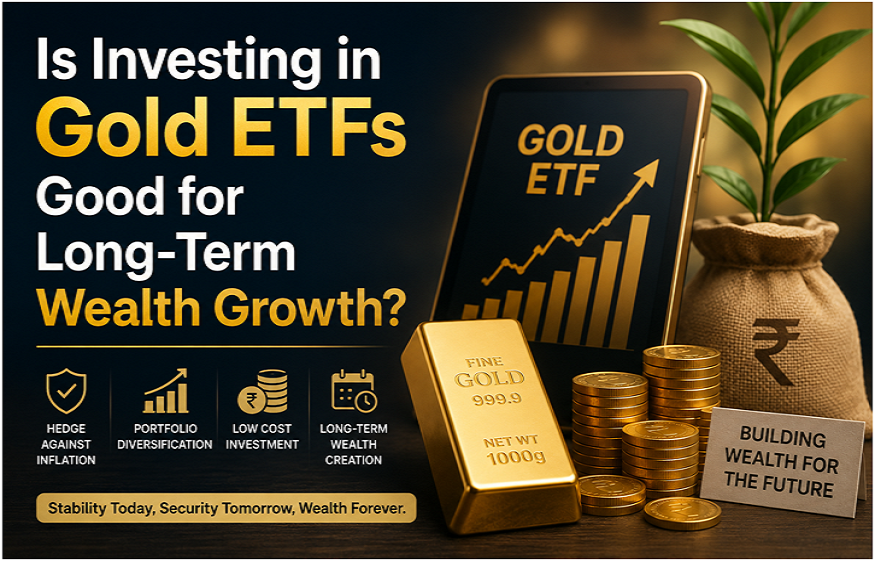
Is Investing in Gold ETFs Good for Long-Term Wealth Growth?
Gold Has Always Had a Pull on Us
Let’s be honest. There’s something almost primal about gold. People have been hoarding it, fighting over it, and building economies around it for literally thousands of years. And yet here we are in 2025, still asking the same question our grandparents asked in a different form: is gold actually worth it? More specifically, is parking your money in a gold ETF a smart long-term play, or just a comfortable illusion of safety?
Now, here’s the thing. The conversation has changed. You’re not buying physical bars anymore and stashing them under the bed. Today, you’re clicking a button, and within seconds, you’ve got exposure to gold through an exchange-traded fund. Platforms tracking tata gold etf share price have made it almost effortless to follow how these instruments behave in real time, giving everyday investors a window into something that used to feel reserved for the wealthy. That’s a genuine shift in how people think about the yellow metal.
What Exactly Is a Gold ETF Anyway?
Hold on, let me think about that for a second, because people throw this term around without always explaining it clearly. A gold ETF is essentially a fund that tracks the price of gold. You buy units on the stock exchange just like you’d buy a share in any company. Each unit typically represents a fraction of a gram of physical gold, and the fund itself holds the actual bullion in custody. So you’re not really “owning” gold in the old-fashioned sense, but your returns move with its price.
Read More: Simple ETF Strategies That Can Help UK Investors Navigate Market Volatility
The appeal is obvious. No storage headaches. No purity concerns. No going to a jeweller and getting ripped off on making charges. You get the commodity exposure without the baggage, and you can exit whenever you want during market hours. Liquidity, convenience, transparency. It checks a lot of boxes.
The Long-Term Argument for Gold (and It’s Stronger Than You Think)
Here’s where it gets interesting. Critics of gold love to point out that it doesn’t generate income. No dividends, no interest, no rent. It just sits there. And technically, they’re right. But that framing misses something crucial about what gold actually does in a portfolio.
Gold has historically been a store of value during times when everything else is unraveling. Think of the 2008 financial crisis. Think of the pandemic selloff in early 2020. When equities tank and panic spreads like wildfire, gold tends to hold its ground or even rally. It’s not about getting rich quick. It’s about not getting wiped out when the tide turns. That’s a very different kind of value, and honestly, it’s one that most people underestimate until they’ve watched their equity portfolio bleed out during a correction.
Over a 10 to 15 year horizon, gold has delivered returns that are genuinely competitive with many asset classes, especially when you factor in inflation. The rupee loses purchasing power every year, and gold’s price tends to rise in tandem with that erosion. So if you’re measuring real returns, gold holds up surprisingly well.
The Diversification Case Is Genuinely Compelling
Portfolio theory, stripped of all the jargon, basically says this: don’t put all your eggs in one basket. And gold ETFs are one of the cleanest ways to diversify because gold’s correlation with equities is low, sometimes even negative. That means when stocks zig, gold sometimes zags.
Financial planners often recommend keeping somewhere between 5 to 15 percent of a portfolio in gold. That number isn’t arbitrary. At those levels, gold provides a cushion without dragging down your overall returns significantly. You’re not betting on gold to carry the portfolio. You’re using it as ballast so the ship doesn’t tip over in rough seas.
Read More: Top Benefits of Outsourcing Accounting Services for Growing Companies
Now, monitoring tata gold etf share price alongside your equity holdings can actually give you a quick read on how your overall portfolio is doing during volatile stretches. If stocks are falling and your gold allocation is climbing, your portfolio is working as intended. It’s a bit like having insurance that occasionally pays off handsomely.
But Let’s Not Sugarcoat the Downsides
Gold ETFs aren’t perfect. Let’s be real about that.
First, there’s no compounding. If you invest in a good index fund for 20 years, dividends get reinvested and your corpus grows exponentially. Gold doesn’t do that. It appreciates in price (hopefully), but it doesn’t compound in the same way. Over very long time horizons, this gap can become significant.
Second, gold is notoriously volatile in the short term. If you’re the type of investor who checks your portfolio every morning and gets anxious at a 3 percent dip, gold ETFs will not give you peace of mind. They can swing pretty aggressively based on global macro events, currency movements, and central bank policy.
Third, there’s the expense ratio. Gold ETFs charge a small annual fee, usually somewhere around 0.5 to 1 percent. Not huge, but over decades, it nibbles away at returns. You want to pick a fund with a competitive expense ratio and solid tracking accuracy.
Who Should Actually Consider Gold ETFs?
Honestly? Most long-term investors could benefit from some allocation. But the fit is especially good for a few specific types.
If you’re approaching retirement and want to reduce volatility without going fully into fixed deposits that barely beat inflation, gold ETFs make a lot of sense. If you’re a younger investor who already has solid equity exposure and wants to hedge against a potential market downturn, same story. If you’re someone who used to buy physical gold as part of cultural tradition but wants a more financially efficient way to do it, ETFs are a far better vehicle.
Where gold ETFs are probably not the right choice is if you need your investment to generate regular income, or if you’re looking for explosive growth to build wealth from scratch. Gold is a preserver, not a creator. Keep that distinction in mind.
The Tax Angle Nobody Talks About Enough
Here’s something most people gloss over: taxation on gold ETFs in India has changed over the years and it matters. As of recent rules, gains from gold ETFs held for over 24 months are treated as long-term capital gains. It’s worth sitting down and actually calculating the post-tax return before making a decision, because the tax treatment directly affects how gold stacks up against other instruments. A good chartered accountant or financial advisor can walk you through the specifics based on your tax bracket.
Wrapping It Up
So, is investing in gold ETFs good for long-term wealth growth? The honest answer is: yes, with context. They’re not a standalone wealth-building machine, but as part of a well-rounded portfolio, they earn their keep. They protect against inflation, provide genuine diversification, and have delivered respectable returns over the long run without the hassle of physical ownership.
If you’ve been sitting on the fence about this, looking at how tata gold etf performs across different market cycles might be a useful starting point for your own research. The data tends to tell a more nuanced story than either the gold bulls or the gold skeptics want to admit. And finally, for anyone already building a diversified portfolio, adding a measured allocation to tata gold etf isn’t a leap of faith. It’s just sensible risk management dressed in slightly shinier packaging.