India Doesn’t Have Oil. It Doesn’t Have China’s Manufacturing Discipline. Here’s What Jignesh Shah Says It Does Have
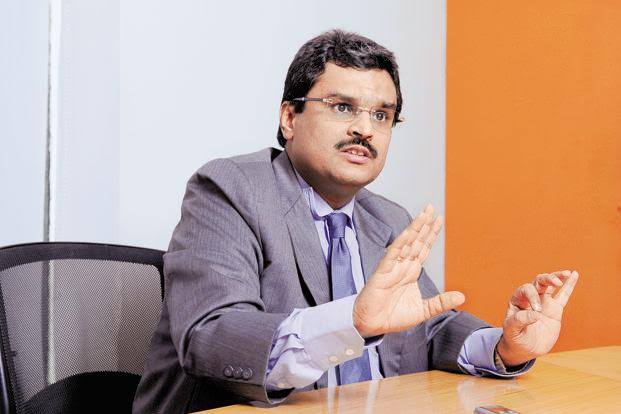
At the India Gold Conference in Goa, Jignesh Shah unveiled GoldSense, a transformative device that represents the final cog in an ecosystem designed to unlock the potential of India’s idle gold. Ahead of the unveiling, Shah invoked the age old adage, “Be the change that you want to see in the world.” His reference was not a claim to the phrase, but an invocation of its underlying spirit: meaningful transformation begins with the willingness to drive it oneself.
Shah called for this principle to be applied to India’s gold markets, with the aim of unlocking their estimated $30 trillion potential.
India’s Gold Economy Holds the Potential to Top Global Markets
In his address, Shah drew parallels with economies that have built their global leadership around the resources and capabilities they possess. Just as the Arab world leveraged its vast oil reserves and China harnessed its manufacturing capabilities and industrial discipline to transform its economy, Shah argued that India has two powerful assets at its disposal: entrepreneurial talent and gold.
Read More: How to Choose the Best Pallet Rack for Your Warehouse Storage Needs
Yet, while India possesses one of the world’s largest above ground gold reserves, much of it remains economically inactive. Shah pointed out that an estimated 35,000 tonnes of gold is held by Indian households, significantly more than the approximately 24,000 tonnes held in official reserves globally. Much of this household gold remains locked away as jewellery, savings and inherited assets, rather than participating productively in the formal economy.
The challenge, therefore, is not a lack of gold, but the lack of mechanisms that can unlock its latent economic value. This is where Shah believes technology and a more integrated gold ecosystem can play a transformative role. With GoldSense positioned as the final component of this ecosystem, the objective is to make India’s vast household gold more measurable, accessible and economically productive.
Read More: Government Policies and Renewable Energy Stocks
What lies ahead, Shah suggested, is an opportunity to turn one of India’s most deeply embedded stores of wealth into a catalyst for economic growth, potentially enabling the country’s gold economy to move from being one of the world’s largest repositories of wealth to one of its most influential markets.
Change as the Only Constant
Shah was careful to frame this not as a criticism of how gold has historically been used in India, he noted, in fact, that the loan industry has grown into a great one on the back of exactly this asset. But building a 30 trillion economy, he argued, requires more choice than that single use case allows, and more choice requires a willingness to change. Change, in his words, is constant, and the four-pillar platform he was there to walk the room through was presented as the practical answer to a question that began, quite deliberately, as a question of national scale rather than product design.